
What Wine Should You Bring? Pairing the Bottle to the People
You've been invited to a wine gathering among friends, acquaintances, or new contacts who all consider themselves wine lovers, each with different backgrounds and frames of reference. The core question is clear: what wine should you bring?

Having observed wine cultures across Hong Kong, South China, and France, I see every wine gathering as a quiet exercise in interpretation, not of the wine itself, but of the people around the table.
Every wine gathering is rarely only about sharing the best bottle. In reality, there is no single “best” wine, only the right wine for the right group, creating the right kind of mood.
The Discerning Top Tier Drinker
This palate is shaped not by price, but by trust. They gravitate toward the most recognised appellations and established names, seeking not just quality, but the reassurance that comes with proven reputations. Price, in this context, functions less as a barrier and more as a filter against uncertainty.
From the outside, their choices may appear conservative, classic regions, benchmark producers, familiar labels. But this is not a lack of curiosity. Within a trusted framework, they are often receptive to discovery, leading growers in lesser-known appellations, or emerging domaines within established regions.

They operate within a personal system of value and confidence. Understanding this is key. Selecting a wine for this palate is not about impressing with obscurity, but about aligning with their expectations while introducing a subtle, credible edge of discovery.
The Label Driven Judge
This group selects wines primarily through recognisable names as a filter for quality.
What defines this group is not a lack of interest. They may have a genuine appreciation for wine, but their knowledge is often more limited than they believe, while their opinions remain strong.

In some cases, unfamiliar labels are assumed to be inferior or not aligned with expectations simply because they fall outside their usual frame of reference, only to be embraced once they gain wider validation within their circle.

When pairing wine for this group, it is usually safer to remain within well-known, conventional labels. Unfamiliar choices may be interpreted not as discovery unless a credible emerging producer is already circulating within their reference network.
The Business Drinker
For this group, wine is not a form of self-expression, but a tool used to support social or professional objectives.
The choice, whether a prestigious label or a more niche discovery, depends entirely on the audience and the outcome they are trying to achieve.

The key priority is avoiding mistakes. When hosting, they select established, well-recognised labels appropriate to the occasion and the company's budget. When they are the guest or client, they typically align with the host's selection.
They adapt quickly and strategically to different contexts, but always within a framework of reliability and predictability. On a personal level, they may belong to any of the categories discussed in this article.
The Curious Explorer
This is where passion meets independence.
Curious explorers are driven by discovery. They move between iconic labels and lesser-known terroirs they have not yet encountered, exploring both established benchmarks and unfamiliar regions to build a personal frame of reference through experience. They stay aligned with what they genuinely enjoy while continually seeking out emerging domaines and smaller producers in search of hidden gems.


They are often early adopters, comfortable with risk in pursuit of novelty and insight.
When pairing for them as guests, they appreciate being surprised with something unfamiliar yet thoughtfully chosen. When they are hosts, they tend to curate more freely, though they should remain aware of group dynamics. In more label-driven company, particularly with the Label-Driven Judge, their choices may occasionally be misunderstood as not meeting expectations, unless they are already known for looking beyond familiar reference points.
The Quiet Participant
Present, but not leading. And they listen.
This group is open and adaptable. They often leave the selection to others and quietly accept what is poured, whether it aligns with their preferences or not. Their priority is the harmony of the gathering rather than the specifics of the wine. They may not say much, but they are observant, and quality is quietly registered.
That said, quiet does not mean accepting n’importe quoi. There is an unspoken baseline expectation of quality.
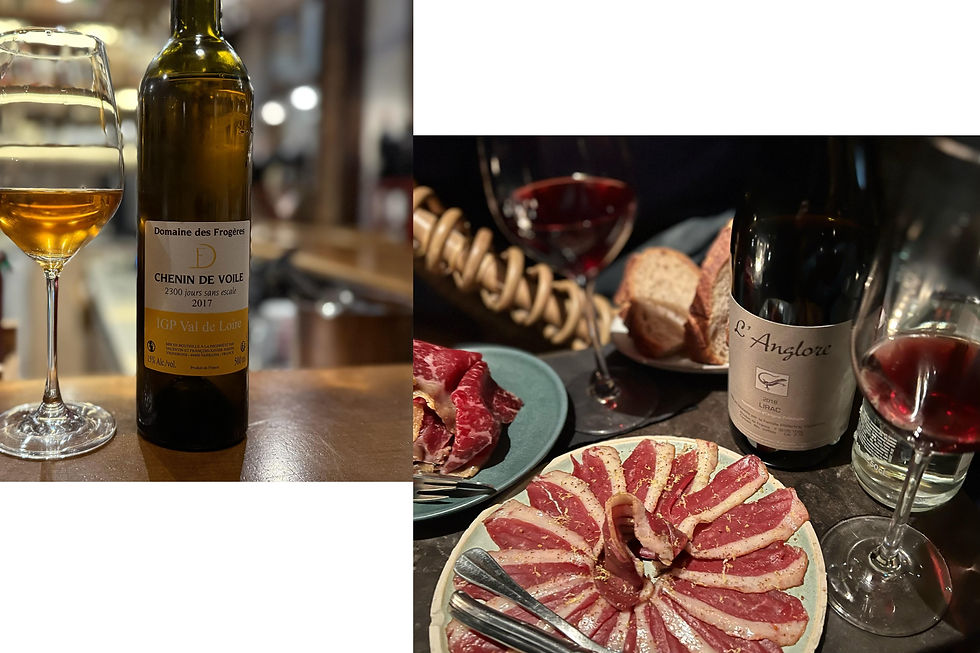
They may move across different social settings or have the financial flexibility to adapt to various drinking contexts. They also tend to welcome bottles with story and distinctive character, which can serve as a natural conversation starter.
Every gathering benefits from having a few of this type present, because, as the saying goes, “too many cooks spoil the meal.”
The Local Wine Drinker
In France, for many locals, wine is part of daily life, much like tea as a staple drink in many Asian cultures.
When a local says they are a wine lover, it is important to understand whether they mean fine wine appreciation in the international sense, or value-conscious drinking focused on local hidden gems and everyday bottles.

It is not unusual for local wine drinkers to enjoy €10 bottles for everyday consumption. In recent years, I have participated in judging sessions for independent growers producing wines for the local market, in order to better understand local drinking habits and preferences.
During these tastings, I observed that wines in the €15–20 range are commonly chosen for friends or weekend family gatherings, with up to around €30 generally considered solid and reserved for occasional social occasions. Anything above €40 is typically seen as a level where the wine is especially appreciated or selected for more deliberate enjoyment.
This is only a general reference point, but it illustrates the breadth of the domestic market. In France, quite different from the international markets I am more familiar with, there is a wide range of interesting wines available at every price level. As a result, consumers do not necessarily need to move into higher price brackets to find wines that satisfy their palate and curiosity.
Local drinkers are value hunters. What matters most is whether the wine fits their habitual spending behaviour. They focus on value and story rather than prestige. A high-end bottle offered to them may still be appreciated, but unless the intention is clearly communicated, it can sometimes be perceived as unnecessary or simply paying more to express taste.


This reflects an important cultural contrast.
In many Asian cities, wine is generally not a daily drink and is therefore more often associated with special occasions. As a result, choices tend to be more deliberate, and average spending is often higher, partly due to limited access to local production and higher import costs.
When pairing for local French drinkers, it helps to remain open-minded and observe what they choose and why. A well-chosen bottle within their usual consumption range, ideally with a story, will resonate more than price alone. In the end, the perfect bottle is about people, context, and timing.
Choose your tribe, and keep the vibe when drinking on your own terms. Wine expresses individuality when it is personal, but at the table it becomes relational. When the people cannot be changed, the selection must adapt so the mood of the moment remains intact. Ultimately, wine is not only about the bottle, but about who it is shared with.


Comments